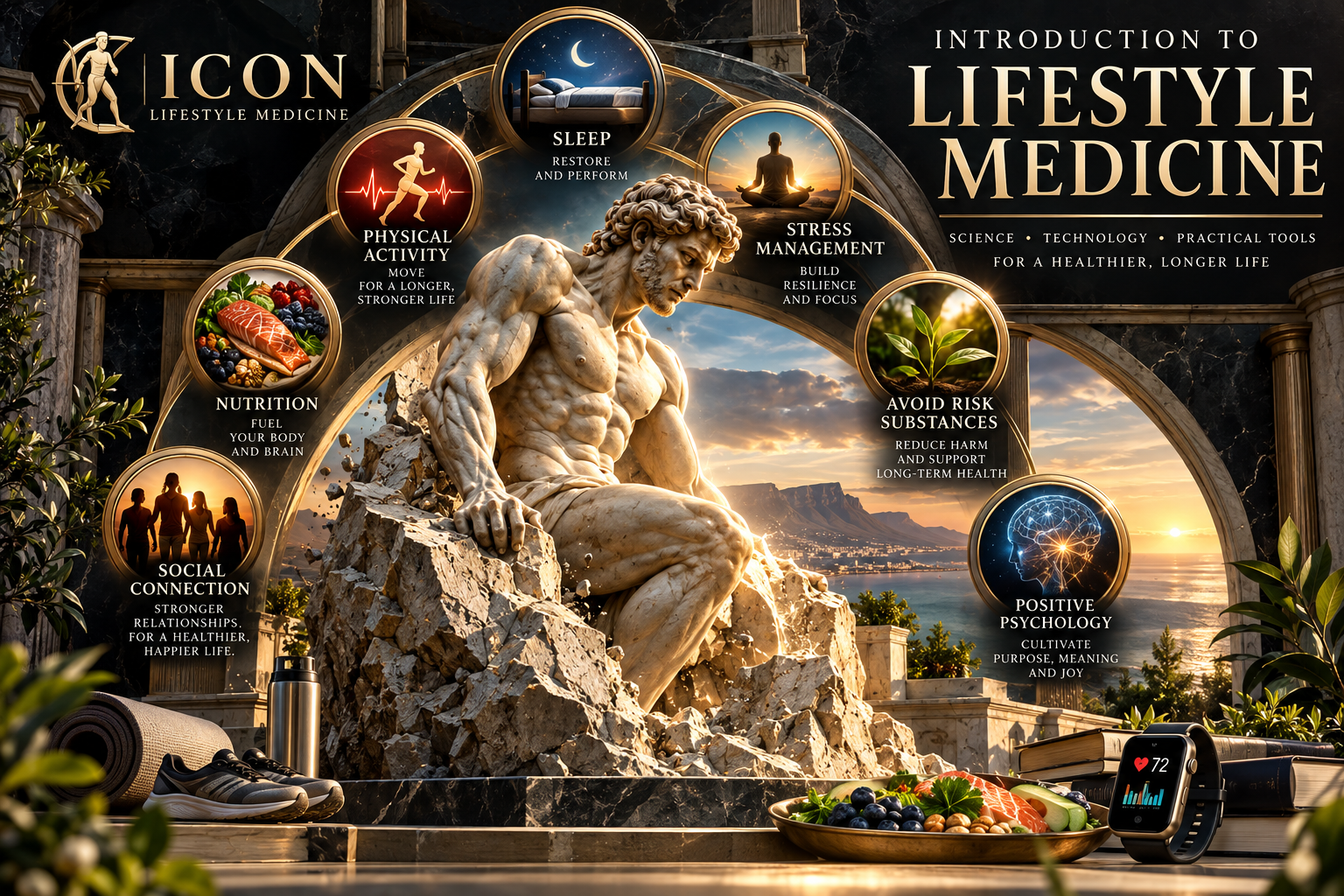
The Science of Living Better, Longer
Course overview.
Lifestyle medicine is an evidence-based approach to preventing, treating, and, in some cases, helping reverse chronic diseases by addressing the lifestyle behaviours that influence health.
Our health is shaped by more than genetics and medical treatment. What we eat, how we move, how well we sleep, how we manage stress, the relationships we maintain, and our use of potentially harmful substances all influence our physical and psychological wellbeing.
This course explores both sides of the problem: the science of health and the psychology of behaviour change.
"Knowing what is healthy does not necessarily mean we will do it."
Not to turn everyone into their own doctor — but to help people become better-informed participants in their healthcare.
The body, explained
Learn how the body’s major systems respond to lifestyle behaviours — from cardiovascular and metabolic health to brain function.
The science of habit
How habits develop, why they persist, and how behavioural science helps translate knowledge into sustainable change.
Technology as a tool
Smartwatches, heart-rate monitors, smart scales, sleep trackers and blood-pressure monitors — used to understand patterns in your health.
The foundations
Six foundational pillars.
Each pillar is grounded in evidence — and each one is a behaviour you can measure, understand and improve.
Sleep
Restore and perform. Understand how sleep shapes recovery, cognition and long-term health.
Physical Activity
Move for a longer, stronger life. How movement protects the heart, brain and body.
Nutrition
Fuel your body and brain. Evidence-based eating patterns that support metabolic health.
Social Connection
Stronger relationships, for a healthier, happier life. The science of human connection.
Stress Management
Build resilience and focus. Practical techniques for regulating stress and recovery.
Avoid Risky Substances
Reduce harm and support long-term health. Understanding risk and making informed choices.
Who is this course for?
Designed for everyone.
No previous medical or scientific training is required.
People who want to improve their health and wellbeing.
Adults interested in healthy ageing, longevity, and maintaining independence.
People who want to improve their fitness, energy, sleep, and resilience.
Individuals interested in understanding their health measurements and wearable technology.
Professionals interested in the principles of lifestyle medicine.
People who want to establish sustainable habits rather than follow another short-lived health programme.
Learning objectives
What you'll be able to do.
By the end of the course, participants will be able to:
Explain the fundamental principles of lifestyle medicine.
Describe how lifestyle behaviours influence cardiovascular, metabolic, neurological, and psychological health.
Identify the six foundational pillars of lifestyle medicine.
Understand the relationship between sleep, physical activity, nutrition, stress, and overall wellbeing.
Explain why people struggle to maintain healthy behaviours and how behavioural science can help.
Establish meaningful personal health baselines.
Understand the benefits and limitations of wearable devices and home health-monitoring technology.
Recognise when health measurements warrant discussion with a healthcare professional.
Develop a realistic, measurable lifestyle improvement plan.
Evaluate progress and adapt their approach over time.
Participants will learn how modern health technology can help them understand patterns in their health and generate useful information to discuss with healthcare professionals.
The ICON Learning Experience
The science of health.
The psychology of change.
Begin with the foundations. Build a sustainable personal health strategy — measured, informed and built to last.
An educational course in lifestyle medicine and behavioural science. Not medical advice.